Measuring knitwear: how to prepare a sweater size chart
Sweater chest width, length, sleeve and neck measurements; body versus garment dimensions, ease and tolerances in knitwear measurement charts.
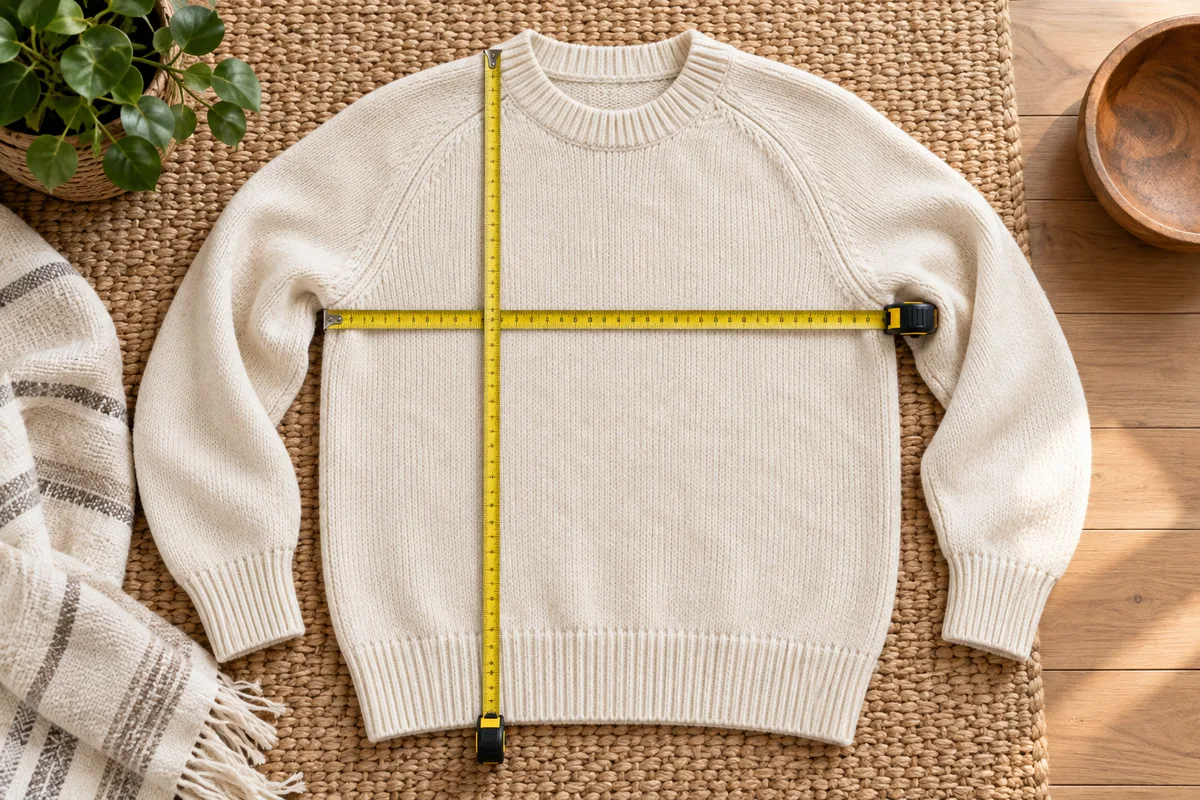
Body measurements and finished-garment measurements
Body measurements describe the wearer; finished-garment measurements describe the garment. The difference can include ease according to the chosen fit. Slim, regular and oversized designs use different finished widths for the same chest measurement. A size label alone is not a measurement standard.
Define measurement points on the drawing
Lay the garment naturally on a flat surface without stretching. For chest width, specify how far below the underarm you measure; for garment length, identify the starting point on the shoulder. Measuring sleeves from the shoulder seam, side neck or centre back neck produces different results. Mark the start and end points on a photograph or technical drawing.
Example recording template
| Measurement | Point to define | Record |
|---|---|---|
| Chest width | Horizontal at the specified level, garment laid flat | cm, half chest circumference |
| Garment length | From the specified shoulder point to the hem | cm, including/excluding collar |
| Sleeve length | From the starting point on the design drawing to the cuff edge | cm, including/excluding cuff |
| Neck opening | Between the two specified neckline points | cm, without stretching |
Do not mix flat chest width (half circumference) and full chest circumference in the same column. Numerical targets are filled in according to the customer’s fit.
Tolerances and checks after washing
Set the target and acceptance tolerance for each measurement point before production. Record the processing stage at which the sample was measured: after knitting, or after washing and relaxation? When checking a size range, assess selected extreme sizes as well as the base size. One universal tolerance does not apply to every design and fibre.