What is a raglan sleeve? Sweater shaping and knitting plans
A guide to sleeve–body joins, top-down and bottom-up knitting, increase and decrease planning, and sample measurements for raglan sweaters.
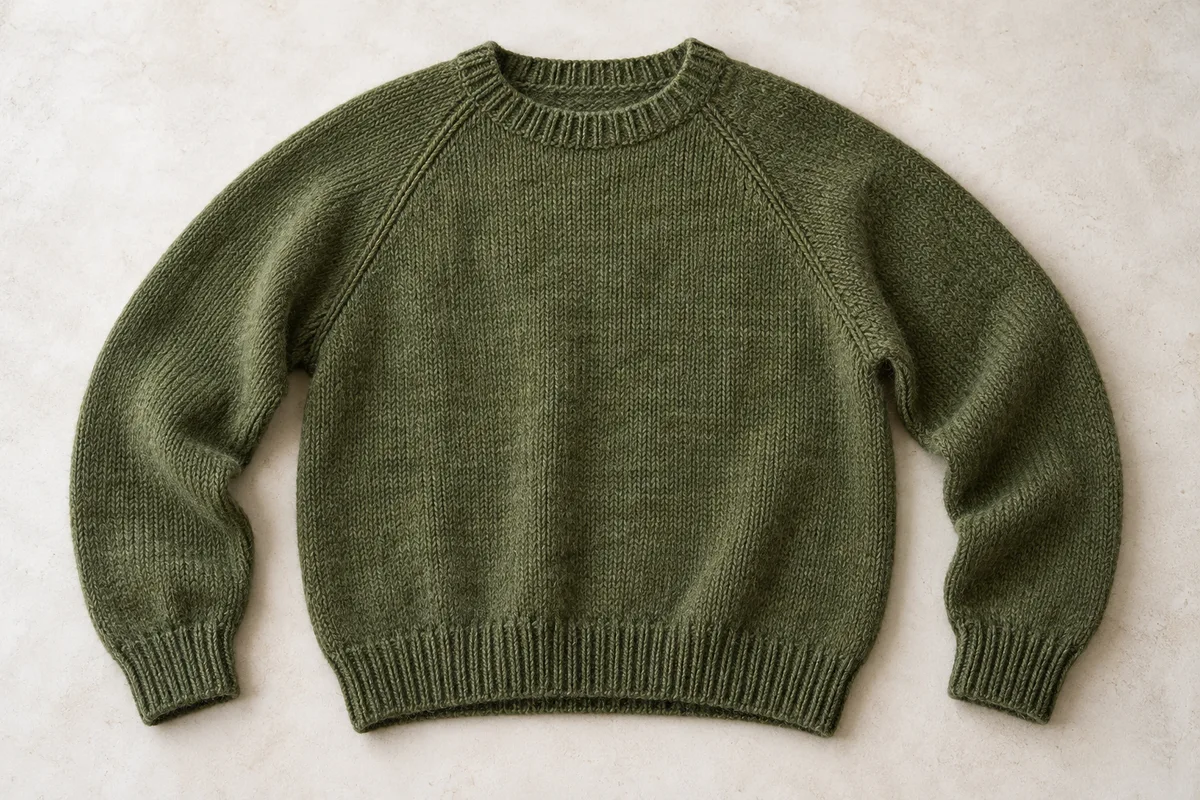
Raglan describes shaping, not a stitch pattern
A raglan sleeve joins the body along a sloping line extending towards the neckline. It can be used in plain, ribbed or patterned sweaters. The appearance of the diagonal line, sleeve fit and neckline are designed together; copying a photograph of a line alone will not reproduce the same fit.
Working top down or bottom up
Some top-down raglan designs start at the neckline, with increases widening the sleeves and body. The sections continue after the sleeves are separated. In bottom-up examples, decreases shape the upper part. The number and frequency of increases are design-specific; there is no fixed row-by-row formula for every raglan.
Measurements affect one another
Chest width, upper-sleeve width, armhole depth, neck opening and raglan line must be considered together. Stitch gauge affects horizontal dimensions, while row gauge affects vertical development. Check arm movement, bunching at the shoulder and excess fabric under the arm in the sample. Raglan-line length and sleeve length are different measurements.
What information should the manufacturer receive?
Keep front and back technical drawings, the size chart, measurement points and the approved knit swatch in one file. Specify any decorative increase marks required along the raglan line. Numbers from a hand-knitting pattern cannot simply be transferred to machine knitting. Bark Knitwear approves dimensions, shape and appearance after care together during design sampling.