Knitwear assembly: from knitting to the finished sweater
Panel inspection, joining, linking, necklines and accessories in knitwear production; the role of washing, pressing and final quality control.
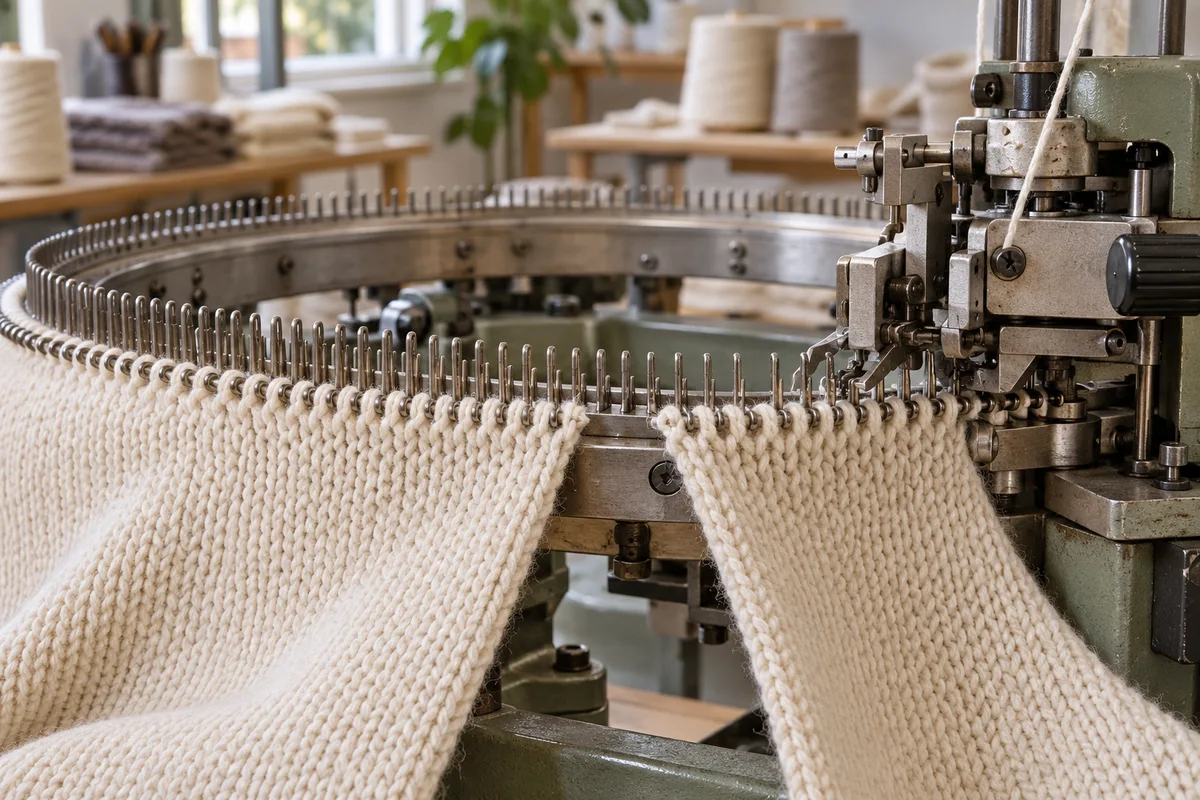
Finishing the knitting does not finish the garment
In sweater production, knitted panels or whole-knitted garments are prepared for subsequent operations according to the selected manufacturing route. Fully fashioned panels, cut-and-sew construction and whole-garment knitting require different workflows. Not every design is assumed to use the same machines or sequence.
Joining and detail operations
Linking is one method of joining suitable panels by following their stitches. Other sewing methods may be chosen according to the design’s construction. The attachment of collars, cuffs, pockets, zips and buttons must be tested in the sample. Seam elasticity and fabric elasticity are assessed together.
Do not leave quality control until the end
Before joining panels, check for holes, dropped stitches, colour and batch consistency, and dimensions. Then inspect seam lines, symmetry, neckline shape and accessory placement. Recording the defect category and corrective decision is more useful than a simple ‘good/bad’ note. Final inspection compares the garment with the approved sample.
An order-specific production file
Send Bark Knitwear the design, size breakdown, colours, labels, packaging and required quality conditions together. Plan sample approval, bulk production and shipment acceptance as separate stages. A workshop photograph does not guarantee a particular capacity, machine gauge or lead time. Production flow, quantity and delivery conditions are established through technical assessment.